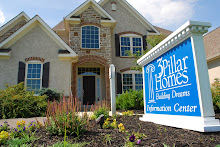
Builders are always talking about "quality," but few can explain what they mean to their new-home clients. This should not be a mystery; construction quality is easy to see when you know what to look for. As a professional builder, we not only take pride in creating high-quality homes, but also in making sure that our homebuyers experience quality and understand the difference it makes.
The building process is relatively foreign to those outside of the industry. The best way to help a homebuyer understand the construction process and appreciate the value of the high-quality materials and methods we employ is to schedule visits to the job site at key milestones.
Walking through a newly framed home, for instance, allows us to point out the tight tolerances we require from our framing crews. On-site, we can show examples and explain why these standards help to ensure reliable performance and comfort in the finished home.
After framing, homeowners can watch the ways that we install the home's wiring, plumbing, and mechanical systems. Our exacting specifications make sure that those systems perform as designed and promised. As construction continues, we encourage new homeowners to schedule similar walk-throughs so we can showcase the high-level materials and methods we use to build homes. What is difficult to articulate in the office becomes clearly demonstrated as the house takes shape.
We also consider the conditions of our job sites as an indicator of quality. We expect, for instance, that our crews and trade partners maintain a clean site. Disposing of trash and scrap materials not only makes for a professional work environment, but also a safe one. We believe that our insistence on a professional looking job site translates to professional, superior-quality workmanship.
As a new home nears completion, quality is even easier to see and understand from a homebuyer's point of view. Again, adhering to tight tolerances, we work hard to make sure that walls are smooth, that cabinets, trim, and other fixtures fit snugly into place. We make certain that windows and doors operate smoothly, and that flooring and other finishes are installed to meet the expectations of our discerning clientele.
But the true test of quality construction is occupancy. New homeowners will understand what we mean by quality after living in their home for a while. How our homes stand the test of time and the rigor of everyday living is a testament to the quality we strive to achieve from the foundation to the rooftop.
Tuesday, February 16, 2010
Tuesday, February 2, 2010
New Technologies Light the Way
Remember the old center-of-the-ceiling light fixture? You entered a room, hit the wall switch, and a couple of light bulbs behind a semi-transparent plate shed general, flat light over the whole room. All features of the room, good and bad, got the same emphasis. There was enough light to avoid tripping over the dog, but not enough light to read by.
Things have changed. Lighting is now a sophisticated design element of the modern home, whether that home is traditional or contemporary in style. Every aspect of lighting -- placement, function, control, style, energy-efficiency -- has evolved to offer exactly what is needed in each room.
The thoughtful placement of lighting fixtures with specific function can make a dramatic change in a room. For example, instead of a big overhead fluorescent panel, new kitchens now feature task-specific fixtures such as recessed spot lights over the sink and other work stations, strip lights under wall cabinets, or dropped fixtures over work islands or eating areas. Other examples of task lighting include automatic bulbs in cabinets and pantries, up- and down-lights that showcase landscaping or artwork, and fixtures positioned to throw light on stair treads.
Lighting controls have also come a long way from the simple wall-mounted switch. Homeowners can program or manipulate lighting schemes to create custom ambiance for a casual dinner party or an intimate evening at home. Timers, remote controls, dimmer switches, and motion sensors enhance the flexibility, beauty and convenience of a lighting design using both wired and wireless technologies.
Besides increasing the technical sophistication of their products, lighting manufacturers have had to keep up with current styles and fashions. Pendants, wall sconces, chandeliers, and domed fixtures are available in an almost endless array of styles and finishes. In addition, lighting suppliers have developed a greater range of compatible fixtures to achieve a coordinated look for all lighting products in the house.
Security lighting has also grown in popularity in recent years. Inside the home, high tech wired and wireless timers can be programmed to create the illusion of activity while the owners are away. Outside, motion-activated lighting is a basic feature, especially at entries. Outdoor fixtures can highlight house numbers to assist emergency services. Lights in the garage and house can flash on and off as part of a security system that alerts neighbors or police of an unauthorized intrusion.
Outdoor light fixtures are increasingly powered by solar energy and light sensors to save even more electricity. Small photovoltaic cells are built right into path and landscape products to power them only at night. These systems require no wiring or current from another source, making them safe and easy to replace as needed. Homeowners enjoy the added convenience and beauty of outdoor lighting, whether or not they remember to turn them on or off.
Professional builders incorporate modern lighting design and products in their new homes, adding long-lasting value while enhancing style, convenience, comfort, security, and efficiency.
Things have changed. Lighting is now a sophisticated design element of the modern home, whether that home is traditional or contemporary in style. Every aspect of lighting -- placement, function, control, style, energy-efficiency -- has evolved to offer exactly what is needed in each room.
The thoughtful placement of lighting fixtures with specific function can make a dramatic change in a room. For example, instead of a big overhead fluorescent panel, new kitchens now feature task-specific fixtures such as recessed spot lights over the sink and other work stations, strip lights under wall cabinets, or dropped fixtures over work islands or eating areas. Other examples of task lighting include automatic bulbs in cabinets and pantries, up- and down-lights that showcase landscaping or artwork, and fixtures positioned to throw light on stair treads.
Lighting controls have also come a long way from the simple wall-mounted switch. Homeowners can program or manipulate lighting schemes to create custom ambiance for a casual dinner party or an intimate evening at home. Timers, remote controls, dimmer switches, and motion sensors enhance the flexibility, beauty and convenience of a lighting design using both wired and wireless technologies.
Besides increasing the technical sophistication of their products, lighting manufacturers have had to keep up with current styles and fashions. Pendants, wall sconces, chandeliers, and domed fixtures are available in an almost endless array of styles and finishes. In addition, lighting suppliers have developed a greater range of compatible fixtures to achieve a coordinated look for all lighting products in the house.
Security lighting has also grown in popularity in recent years. Inside the home, high tech wired and wireless timers can be programmed to create the illusion of activity while the owners are away. Outside, motion-activated lighting is a basic feature, especially at entries. Outdoor fixtures can highlight house numbers to assist emergency services. Lights in the garage and house can flash on and off as part of a security system that alerts neighbors or police of an unauthorized intrusion.
Outdoor light fixtures are increasingly powered by solar energy and light sensors to save even more electricity. Small photovoltaic cells are built right into path and landscape products to power them only at night. These systems require no wiring or current from another source, making them safe and easy to replace as needed. Homeowners enjoy the added convenience and beauty of outdoor lighting, whether or not they remember to turn them on or off.
Professional builders incorporate modern lighting design and products in their new homes, adding long-lasting value while enhancing style, convenience, comfort, security, and efficiency.

Monday, January 25, 2010

Tuesday, January 19, 2010
Heating and Cooling System Care
A new home today is built to consume less energy than those of just a decade ago. Such a home is nearly airtight with controlled fresh-air ventilation for energy efficiency and improved indoor air quality.
To heat and cool a home built for high performance, a professional builder can select top-quality heating and cooling equipment to ensure year-round comfort and energy savings. However, if the owners want that equipment to perform as designed, they must maintain it.
Fortunately, the proper maintenance of heating, ventilating, and air conditioning systems (commonly referred to as "HVAC") does not require homeowners to be mechanical contractors. A few easy steps for preventive care, conducted on schedule, are usually all it takes to keep those systems humming at peak performance.
The vast majority of residential HVAC systems are "forced air" configurations. The system consists of a centrally located condenser along with a furnace and blower units that push heated or cooled air through a network of large pipes (or ducts) into the rooms of the house through vent registers.
A forced air system relies on other ducts to suck in and return air to the system from registers near the ceiling. "Return" air is either recycled through the system or exhausted to the outside, keeping the inside air fresh and comfortable.
Maintaining this system starts at the blower, which circulates a high volume of air. The blower contains a removable filter to prevent small particles and allergens from contaminating the indoor air. For most HVAC systems, the filter should be replaced every three months. Some newer, high-performance systems may have filters that only need to be replaced semi-annually or even just once a year. Consult your owner's manual for frequency of replacement as well as size of filter. Filters of all sizes are available at most home improvement and hardware stores and are easy to remove and reinsert into the blower.
The next component to maintain is the ductwork. It's a good idea, even in a new house, to have the ducts cleaned out at least every two years. In fact, most professional builders will offer or simply conduct a thorough duct cleaning before the owners of a new house take occupancy. Responsible builders do not want their buyers to be greeted with a puff of construction dust the first time the HVAC system is used! Two years later, the owners should contact a local duct-cleaning service or ask their builder for a recommendation.
On the same every-other-year schedule, the entire HVAC system should be checked by a professional mechanical contractor. Again, your builder can recommend a reputable service, ideally the company that installed the system. This check-up will ensure that the system is operating properly; bringing enough fresh air into the house, providing adequate ventilation and maximizing energy efficiency. Homeowners can do random spot checks by inspecting the outside of the equipment for any leaks, cracks, or other abnormalities and reporting those to their builder or HVAC service contractor.
This type of simple and inexpensive maintenance program will help to keep the HVAC system running at optimum performance for many years.
To heat and cool a home built for high performance, a professional builder can select top-quality heating and cooling equipment to ensure year-round comfort and energy savings. However, if the owners want that equipment to perform as designed, they must maintain it.
Fortunately, the proper maintenance of heating, ventilating, and air conditioning systems (commonly referred to as "HVAC") does not require homeowners to be mechanical contractors. A few easy steps for preventive care, conducted on schedule, are usually all it takes to keep those systems humming at peak performance.
The vast majority of residential HVAC systems are "forced air" configurations. The system consists of a centrally located condenser along with a furnace and blower units that push heated or cooled air through a network of large pipes (or ducts) into the rooms of the house through vent registers.
A forced air system relies on other ducts to suck in and return air to the system from registers near the ceiling. "Return" air is either recycled through the system or exhausted to the outside, keeping the inside air fresh and comfortable.
Maintaining this system starts at the blower, which circulates a high volume of air. The blower contains a removable filter to prevent small particles and allergens from contaminating the indoor air. For most HVAC systems, the filter should be replaced every three months. Some newer, high-performance systems may have filters that only need to be replaced semi-annually or even just once a year. Consult your owner's manual for frequency of replacement as well as size of filter. Filters of all sizes are available at most home improvement and hardware stores and are easy to remove and reinsert into the blower.
The next component to maintain is the ductwork. It's a good idea, even in a new house, to have the ducts cleaned out at least every two years. In fact, most professional builders will offer or simply conduct a thorough duct cleaning before the owners of a new house take occupancy. Responsible builders do not want their buyers to be greeted with a puff of construction dust the first time the HVAC system is used! Two years later, the owners should contact a local duct-cleaning service or ask their builder for a recommendation.
On the same every-other-year schedule, the entire HVAC system should be checked by a professional mechanical contractor. Again, your builder can recommend a reputable service, ideally the company that installed the system. This check-up will ensure that the system is operating properly; bringing enough fresh air into the house, providing adequate ventilation and maximizing energy efficiency. Homeowners can do random spot checks by inspecting the outside of the equipment for any leaks, cracks, or other abnormalities and reporting those to their builder or HVAC service contractor.
This type of simple and inexpensive maintenance program will help to keep the HVAC system running at optimum performance for many years.
Tuesday, January 5, 2010
After the Home is Built...
What ever happened to customer service?
Today, simple respect and responsiveness seems to be more the exception than the rule ... especially after the sale. How a homebuilder manages after-sale service, also called warranty service or call-backs, is a key indicator of the company's overall professionalism and ability to meet (and ideally exceed) a homebuyer's expectations.
The goal of the professional builder is to quickly and completely respond to and resolve issues that come up during the time a home is under warranty. As a critical part of providing great housing value and achieving customer satisfaction, professional builders encourage questions from homebuyers and respond to their concerns in a timely and respectful manner.
Typically, a builder's warranty addresses specific issues with a home related to its structural components (such as the foundation and frame), basic electrical and other mechanical systems, and the quality of workmanship for a set time period. How a builder responds to warranty service inquiries varies depending on the policy offered and sold with the house: some are defined and managed entirely by the builder, while others are defined, at least in part, by independent agencies (such as an insurance company) and administered by the builder.
Specific warranty language and procedures benefit both the builder and the homeowner. Simply, a well-defined and properly communicated warranty service policy helps eliminate confusion about who is responsible for issues, concerns, and other call-back items that may occur in the first year or so of occupancy.
While there are specific differences among builders, a superior warranty service program includes:
Documentation. A documented process for responding to call-backs and customer service inquiries creates a "paper trail" that ensures that questions and concerns are properly communicated, managed, and resolved. A professional builder will document the details of the warranty policy and keep track of inquiries, response time, and specific types of service calls from the first call to follow-up to ensure the homeowner's ultimate satisfaction.
Response time. Responding to a service call is more an issue of timing than time; the key is to understand which calls will be addressed immediately, and which may require or allow more time. No one likes to wonder if or when a call or email will be answered; if homeowners can depend on getting a reply from their builder within a reasonable (or better still, stated) time frame, chances are better that they'll be satisfied with how the issue is resolved.
Collective calls. Even if a builder responds to a warranty service call within a day or so, making a visit to the house to resolve a non-emergency situation may be timed to coincide with other scheduled work at the house. This "collective call" minimizes the number of times an owner needs to be at home to make the house available to the builder's warranty service team. Of course, emergency calls demand immediate attention, but collective calls can be a more convenient and reliable way to address a variety of concerns or maintenance issues at the same time.
Scheduled visits. Professional builders are becoming more proactive in how they address scheduled service and other routine maintenance work while a house is still under warranty. In many cases, a builder will schedule a visit and "walk through" (or tour) a new home within a month after occupancy. These visits are opportunities for homeowners to ask questions and for the builder to document or schedule service work covered by the warranty. Such visits also help builders refine their warranty service processes based on a homeowner's feedback.
No builder follows exactly the same policies and procedures for warranty service, inquiries and incidents. Our goal as building professionals is to provide each client with the best new home buying and living experience possible. How builders refine and improve their after the sale process goes a long way toward delivering superior customer service and buyer satisfaction.
Today, simple respect and responsiveness seems to be more the exception than the rule ... especially after the sale. How a homebuilder manages after-sale service, also called warranty service or call-backs, is a key indicator of the company's overall professionalism and ability to meet (and ideally exceed) a homebuyer's expectations.
The goal of the professional builder is to quickly and completely respond to and resolve issues that come up during the time a home is under warranty. As a critical part of providing great housing value and achieving customer satisfaction, professional builders encourage questions from homebuyers and respond to their concerns in a timely and respectful manner.
Typically, a builder's warranty addresses specific issues with a home related to its structural components (such as the foundation and frame), basic electrical and other mechanical systems, and the quality of workmanship for a set time period. How a builder responds to warranty service inquiries varies depending on the policy offered and sold with the house: some are defined and managed entirely by the builder, while others are defined, at least in part, by independent agencies (such as an insurance company) and administered by the builder.
Specific warranty language and procedures benefit both the builder and the homeowner. Simply, a well-defined and properly communicated warranty service policy helps eliminate confusion about who is responsible for issues, concerns, and other call-back items that may occur in the first year or so of occupancy.
While there are specific differences among builders, a superior warranty service program includes:
Documentation. A documented process for responding to call-backs and customer service inquiries creates a "paper trail" that ensures that questions and concerns are properly communicated, managed, and resolved. A professional builder will document the details of the warranty policy and keep track of inquiries, response time, and specific types of service calls from the first call to follow-up to ensure the homeowner's ultimate satisfaction.
Response time. Responding to a service call is more an issue of timing than time; the key is to understand which calls will be addressed immediately, and which may require or allow more time. No one likes to wonder if or when a call or email will be answered; if homeowners can depend on getting a reply from their builder within a reasonable (or better still, stated) time frame, chances are better that they'll be satisfied with how the issue is resolved.
Collective calls. Even if a builder responds to a warranty service call within a day or so, making a visit to the house to resolve a non-emergency situation may be timed to coincide with other scheduled work at the house. This "collective call" minimizes the number of times an owner needs to be at home to make the house available to the builder's warranty service team. Of course, emergency calls demand immediate attention, but collective calls can be a more convenient and reliable way to address a variety of concerns or maintenance issues at the same time.
Scheduled visits. Professional builders are becoming more proactive in how they address scheduled service and other routine maintenance work while a house is still under warranty. In many cases, a builder will schedule a visit and "walk through" (or tour) a new home within a month after occupancy. These visits are opportunities for homeowners to ask questions and for the builder to document or schedule service work covered by the warranty. Such visits also help builders refine their warranty service processes based on a homeowner's feedback.
No builder follows exactly the same policies and procedures for warranty service, inquiries and incidents. Our goal as building professionals is to provide each client with the best new home buying and living experience possible. How builders refine and improve their after the sale process goes a long way toward delivering superior customer service and buyer satisfaction.
Wednesday, December 16, 2009
New President of the Building Industry Assocation of Central Ohio

On December 4th, 2009, President & CEO of 3 Pillar Homes, Zenios Michael Zenios, was named the new President of the Building Industry Association of Central Ohio
Tuesday, December 15, 2009
Adding Style through Hardscape Options
It wasn't long ago that the most you could expect for your new house was a white slab of concrete approaching your garage and your front door. Maybe another slab on the other side as a small patio. That was the only option offered by most new home builders.
Thankfully, those days are past. Now the best builders recognize that such "hardscape" areas are essential to the curb appeal of their new homes. What was formerly a neutral -- or detrimental -- feature now delivers distinctive style and a boost to the overall value of the house.
Builders and homebuyers have several options available to vary their hardscape areas and bring a little zing to this neglected element of a home's style. Here are a few to consider:
Stamped concrete. Just as it sounds, the masonry or concrete contractor places textured panels of various sizes over an area of newly poured concrete and applies a slight bit of pressure to make an impression. Once the concrete sets, the panels are removed to reveal a permanent pattern.
Stamped concrete is an excellent and cost-effective way to add the three-dimensional look of a custom-etched or troweled concrete surface, hand-laid bricks or stone pavers. Several patterns, from uniform bricks to more abstract textures, enable builders and homebuyers to satisfy their personal tastes and to compliment the style of the new home. Stamped concrete can be used to highlight the walkway to the front door or create a consistent, dimensional look for all of the home's hardscape areas.
Colored concrete. When colored concrete is desired, a pigment is added as the concrete is being mixed (called an "integral" coloring process). This means that the color is mixed through the depth of the hardscape area, not just painted on the surface. Colored concrete is often used to highlight a hardscape feature, such as a walkway. Used in conjunction with stamped concrete technique, the integral coloring process can enhance the authenticity of a pattern, such as red bricks or dark stone pavers.
Aggregate. Another option that adds dimension to a standard concrete surface is exposed aggregate. Small rounded stones are added to the concrete mix. Then the concrete surface is brushed before the concrete sets, exposing the texture and slight color variations of the authentic pebbles. Exposed aggregate can add interest to an otherwise featureless expanse for a relatively low cost.
Bricks and pavers. There's no substitute for the "real thing" if it fits the budget. Laying individual bricks or stones -- available in various sizes, shapes, and colors -- is a labor-intensive (and thus more costly) endeavor. The preparation for a brick or stone path, patio, or driveway is much the same as that for a poured concrete hardscape. However, laying each brick (and sometimes cutting it to fit), maintaining a pattern and straight lines, and securing the pieces in place with either mortar or sand takes much more time and skill.
One practical advantage of this option: replace individual damaged pieces as necessary. For this reason, we recommend ordering about 5% more material than the job requires so that a consistent appearance can be maintained as pieces are replaced over time. Of course, the greatest advantage to hand-laid bricks and pavers is aesthetic. The natural materials show slight undulations and variations in color and texture that are unmistakable.
Thin (or veneer) bricks and stones can help lower the cost of the hand-laid approach, but these are most suitable as accents, such as lining a concrete driveway or walk. They are less suited to high-traffic areas that must carry greater weight.
Used in creative combinations, the options available for hardscapes offer builders and homeowners unlimited ways to achieve unique surfaces. Effective hardscapes will enhance a new home's architectural style, increase its value and bring long-term satisfaction to the owner.
Thankfully, those days are past. Now the best builders recognize that such "hardscape" areas are essential to the curb appeal of their new homes. What was formerly a neutral -- or detrimental -- feature now delivers distinctive style and a boost to the overall value of the house.
Builders and homebuyers have several options available to vary their hardscape areas and bring a little zing to this neglected element of a home's style. Here are a few to consider:
Stamped concrete. Just as it sounds, the masonry or concrete contractor places textured panels of various sizes over an area of newly poured concrete and applies a slight bit of pressure to make an impression. Once the concrete sets, the panels are removed to reveal a permanent pattern.
Stamped concrete is an excellent and cost-effective way to add the three-dimensional look of a custom-etched or troweled concrete surface, hand-laid bricks or stone pavers. Several patterns, from uniform bricks to more abstract textures, enable builders and homebuyers to satisfy their personal tastes and to compliment the style of the new home. Stamped concrete can be used to highlight the walkway to the front door or create a consistent, dimensional look for all of the home's hardscape areas.
Colored concrete. When colored concrete is desired, a pigment is added as the concrete is being mixed (called an "integral" coloring process). This means that the color is mixed through the depth of the hardscape area, not just painted on the surface. Colored concrete is often used to highlight a hardscape feature, such as a walkway. Used in conjunction with stamped concrete technique, the integral coloring process can enhance the authenticity of a pattern, such as red bricks or dark stone pavers.
Aggregate. Another option that adds dimension to a standard concrete surface is exposed aggregate. Small rounded stones are added to the concrete mix. Then the concrete surface is brushed before the concrete sets, exposing the texture and slight color variations of the authentic pebbles. Exposed aggregate can add interest to an otherwise featureless expanse for a relatively low cost.
Bricks and pavers. There's no substitute for the "real thing" if it fits the budget. Laying individual bricks or stones -- available in various sizes, shapes, and colors -- is a labor-intensive (and thus more costly) endeavor. The preparation for a brick or stone path, patio, or driveway is much the same as that for a poured concrete hardscape. However, laying each brick (and sometimes cutting it to fit), maintaining a pattern and straight lines, and securing the pieces in place with either mortar or sand takes much more time and skill.
One practical advantage of this option: replace individual damaged pieces as necessary. For this reason, we recommend ordering about 5% more material than the job requires so that a consistent appearance can be maintained as pieces are replaced over time. Of course, the greatest advantage to hand-laid bricks and pavers is aesthetic. The natural materials show slight undulations and variations in color and texture that are unmistakable.
Thin (or veneer) bricks and stones can help lower the cost of the hand-laid approach, but these are most suitable as accents, such as lining a concrete driveway or walk. They are less suited to high-traffic areas that must carry greater weight.
Used in creative combinations, the options available for hardscapes offer builders and homeowners unlimited ways to achieve unique surfaces. Effective hardscapes will enhance a new home's architectural style, increase its value and bring long-term satisfaction to the owner.
Subscribe to:
Posts (Atom)